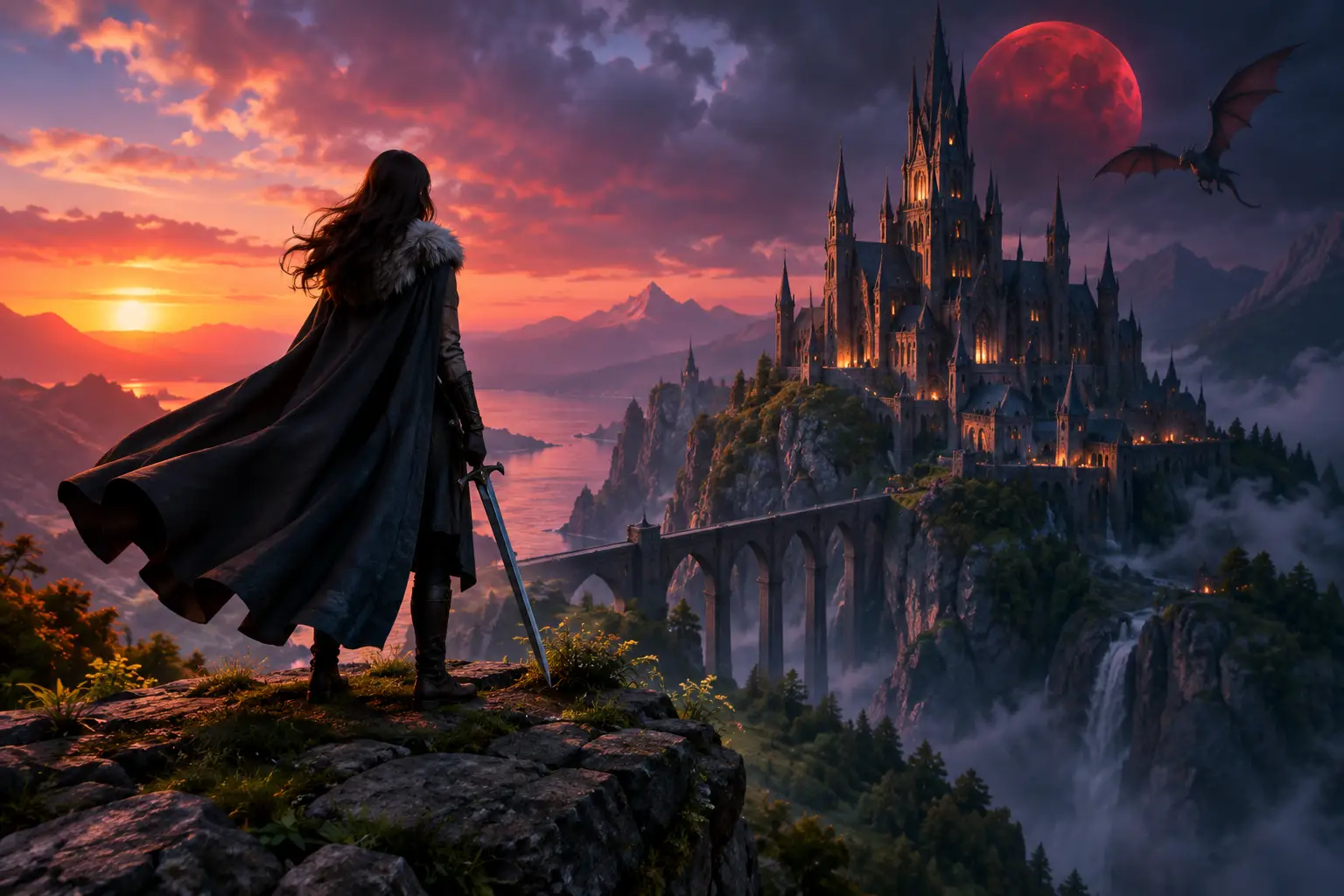
A crown can save a kingdom and still be bought with blood. A monster can guard the last safe road. A hero can win the war, then discover the victory has made them the very thing they feared. That tension is the beating heart of the question, what is dark fantasy genre fiction?
Dark fantasy takes the wonder, magic, and impossible realms of fantasy and casts them beneath a longer shadow. It does not abandon beauty or heroism. It asks what they cost. Its worlds may hold ancient forests, celestial prophecies, cursed blades, and towering citadels, but safety is never guaranteed simply because a chosen one has arrived.
For readers, writers, and roleplayers, dark fantasy offers more than grim scenery. It creates a place where choices leave scars, loyalties can fracture, and a character's legend is forged not only by power, but by what they refuse to become.
What Is the Dark Fantasy Genre?
Dark fantasy is a branch of fantasy that blends magical or otherworldly elements with horror, tragedy, dread, or moral uncertainty. The setting remains fantastic: there may be dragons, sorcery, lost kingdoms, gods, and strange realms beyond the mortal map. Yet the atmosphere is more ominous, and the story is more willing to confront fear, corruption, death, and the peril hidden inside human desire.
A dark fantasy tale may follow a knight crossing a plague-ridden empire, a witch bargaining with a river spirit, or an exile carrying a relic that slowly rewrites their soul. The central conflict is often external and internal at once. Defeating the enemy matters, but so does surviving the price of the fight.
That does not mean every dark fantasy story is relentlessly bleak. Humor, tenderness, wonder, and triumph can make its shadows feel sharper. The distinction is that hope must be earned. It is not handed down by prophecy, royal blood, or a clean promise that goodness will always prevail.
The Elements That Give Dark Fantasy Its Power
Dark fantasy is not defined by a single creature, a certain amount of violence, or a gray color palette. It is a matter of mood, stakes, and the relationship between power and consequence.
Magic Is Beautiful, Dangerous, or Both
In lighter fantasy, magic may feel like a door to adventure. In dark fantasy, that door can open onto a crypt. Spells might demand a memory, a vow, a life, or a piece of the caster's identity. A magical gift can also be a curse waiting for the right moment to reveal its teeth.
This approach makes power dramatic. A character cannot simply ask, "Can I do this?" They must ask, "What will this make of me?" For roleplay, that question creates scenes with real weight. A healer might save an ally by drawing poison into their own blood. A warrior might use forbidden fire and become feared by the people they meant to protect.
Evil Is Rarely Simple
Dark fantasy can feature unmistakable evil: tyrants, demons, ancient hungers, and horrors that should never have risen. But it often refuses to make every conflict easy to judge. A desperate village may feed travelers to a creature beneath the mountain because the creature keeps a worse force asleep. A ruler may commit cruelty in the name of preventing civil war.
Moral ambiguity does not mean nothing matters. In fact, it makes morality matter more. When every path has a cost, compassion, courage, and restraint become acts of defiance rather than default settings.
The World Has Teeth
A dark fantasy realm often feels old, wounded, and watchful. Its ruins are not merely decorative. They contain the consequences of forgotten empires. Its wilderness is not empty space between cities. It may be claimed by spirits, beasts, curses, or rival powers with reasons to mistrust strangers.
The world itself becomes a source of story. Every ash-covered battlefield, moonlit shrine, and drowned road suggests that someone came before, made a choice, and left a reckoning behind. Players and writers are invited to enter that history rather than stand outside it.
Heroism Survives the Dark
This is the piece people sometimes miss. Dark fantasy is not simply fantasy with more suffering. If there is no possibility of meaningful resistance, sacrifice, love, or transformation, the darkness becomes flat.
A dark fantasy hero may be flawed, frightened, or stained by past failures. They may not restore the world to innocence. But they can protect one person, break one curse, spare one enemy, or preserve a fragile light when the night insists it cannot last. Those victories carry gravity because they were never assured.
Dark Fantasy vs. Grimdark, Horror, and Traditional Fantasy
These genres overlap, and no border is perfectly guarded. Still, knowing the differences helps you find the stories and roleplay tone you want.
Traditional fantasy often leans more openly toward adventure, wonder, and a clearer struggle between good and evil. It can contain danger and heartbreak, but its moral center may feel steadier. Dark fantasy brings dread closer to the surface and makes magic, institutions, and heroes more vulnerable to corruption.
Horror is built primarily to unsettle, frighten, or confront the unknown. Dark fantasy can be horrifying, especially when it uses monsters, curses, or body horror, but it remains rooted in a fantasy world where quests, realms, legends, and heroic action still drive the story. The fear lives alongside the adventure.
Grimdark is usually more cynical. It often emphasizes brutal politics, compromised institutions, and a world in which noble ideals are routinely crushed or exposed as lies. Dark fantasy can share that harshness, but it does not have to. A dark fantasy story may retain a strong spiritual or heroic pulse. The world is cruel, yet the choice to be good still means something.
It depends on the story. A mercenary campaign full of treachery may feel grimdark. A quest through a cursed kingdom where a fallen prince seeks redemption may feel more distinctly dark fantasy. Both may be violent and morally complex, but their emotional promises differ.
Why Dark Fantasy Belongs in Roleplay
Roleplay thrives on choices that change relationships, reputations, and futures. Dark fantasy gives those choices a charged stage. A character is not only deciding whether to enter the ruined cathedral. They are deciding whether to trust the voice calling from beneath it, whether to reveal the secret that could save the party, and whether survival is worth the betrayal required.
The genre also gives original characters room to be more than flawless champions. Forge a disgraced knight who still kneels before no tyrant. Create a scholar whose pursuit of forbidden lore began with a sincere desire to save their family. Write a monster hunter who fears that the curse they track is inherited through their own bloodline.
These are not excuses to make every character cruel or invincible. The strongest dark fantasy characters have limits. They make mistakes. They need others. Their wounds shape them, but do not replace personality. Give them values worth testing, then let the world test them.
A shared setting such as Continents of Delarom can turn this into collaborative legend-building. One hero's bargain may create a rumor another hero investigates. A shattered alliance can alter the politics of a realm. A relic recovered from a haunted coast may become the seed of a future war. The darkness feels alive because other people are writing within it too.
How to Recognize a Strong Dark Fantasy Story
Look beyond surface details. A black cloak, a bloody sword, or a ruined castle does not automatically create dark fantasy. Ask whether the darkness changes the characters and their decisions.
A strong story gives its horrors a purpose. The curse reveals something about grief, ambition, faith, or power. The monster pressures characters to expose their fears and loyalties. The setting's cruelty does not exist only for shock. It creates a meaningful challenge to the values the story wants to examine.
It also knows when to let the reader breathe. Quiet scenes around a dying fire, a hard-won joke between companions, or a glimpse of a city worth defending can carry as much force as a battle. Without contrast, dread becomes noise. With contrast, a single candle in a ruined chapel can feel like a declaration of war against the dark.
Write a Legend That Can Bear the Night
Dark fantasy asks a fierce question: who are you when goodness is difficult, danger is intimate, and every miracle demands something in return? There is no single correct answer. Your hero may answer with mercy, wrath, cunning, sacrifice, or a vow that outlives them.
Give them a realm worth crossing, a shadow worth facing, and a choice that cannot be undone. Then let them write their legend where the stars are dim, the old gods are listening, and even the smallest act of courage can change the fate of a world.