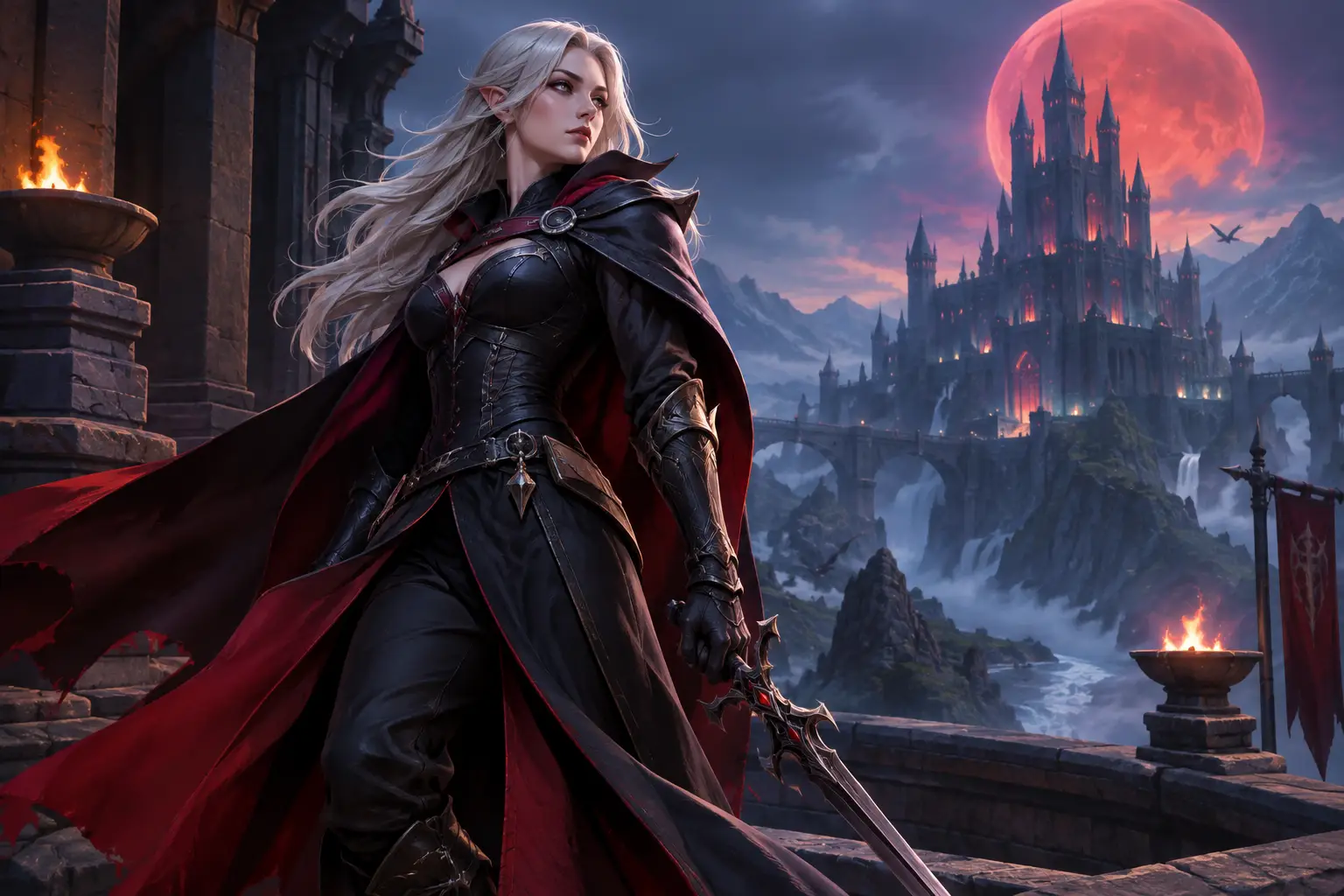
A dark fantasy character should arrive carrying consequences. Not just a black cloak, a tragic past, or a weapon with an ominous name - consequences. When you learn how to create a dark fantasy character, begin with the mark the world has left upon them, and the mark they may yet leave in return.
In dark fantasy, heroism is rarely clean. A healer may preserve a tyrant because the alternative is worse. A knight may protect a village while hiding the blood debt that brought monsters to its gates. Your character does not need to be cruel, cursed, or broken to belong in the shadows. They need something to lose, a reason to act, and a choice that cannot be made without cost.
Begin With the Wound, Not the Wardrobe
A memorable character has an inner pressure point. This is the wound: a grief, hunger, oath, shame, fear, or unanswered question that changes how they see every room they enter. It is not merely backstory. It is a force active in the present.
Perhaps your character watched a sacred order burn their home, and now distrusts every promise of divine mercy. Perhaps they were raised among grave-tenders and believe death deserves reverence, even when others call their practices vile. Maybe they made one impossible bargain to save a sibling and have spent years becoming the thing that bargain required.
The wound should create movement. If it only explains why your character looks miserable, it will soon fade into decoration. Ask what the wound makes them do: whom do they avoid, what temptation can reach them, and what truth are they unable to face?
A dark past is not automatically depth. Specificity is what gives it weight. “My family was murdered” is a premise. “I cannot remember whether I opened the gate that let the murderers in” is a story waiting to happen.
Give Them a Desire Worth Corrupting
Dark fantasy thrives on noble desires pushed into dangerous territory. Your character may seek justice, safety, knowledge, freedom, belonging, redemption, or the return of someone lost. Start with a desire the reader or fellow roleplayers can understand. Then decide what makes pursuing it perilous.
A warrior who wants power for its own sake can work, but a warrior who wants power because no child should ever be helpless again has far more room to grow or fall. They may become a protector. They may become a conqueror. The desire stays recognizable while the choices reveal the person.
This is where moral tension enters the character. Give them a line they claim they will never cross, then build a situation in which crossing it might actually save someone. Do not force darkness for spectacle alone. Let it emerge from a meaningful collision between what they want and what the world demands.
The strongest dark fantasy characters are not defined by how much pain they can endure. They are defined by what pain persuades them to become.
Build a Shadow That Is Personal
A curse, monster, rival, ancestral sin, or forbidden power can give a character immediate atmosphere. Yet the shadow becomes compelling only when it speaks directly to their wound and desire.
If your character fears abandonment, a sentient blade that offers absolute loyalty may be more dangerous than a random demon. If they crave forgiveness, a spirit that can erase memories may offer relief at the price of responsibility. If they were born into a cruel dynasty, their enemy might be the relative who insists cruelty is their inheritance.
Make the threat capable of tempting them, not merely attacking them. A shadow that only wants to kill the hero creates action. A shadow that understands the hero’s secret wish creates drama.
There is a trade-off here. A grand curse can make a character feel mythic, but it can also swallow every scene if nothing else matters. Leave room for ordinary hungers: a favorite song, a rival they enjoy provoking, a fear of deep water, an awkward tenderness toward animals. Small human details keep cosmic darkness from becoming hollow.
How to Create a Dark Fantasy Character for Roleplay
In collaborative roleplay, your character must do more than carry a compelling private story. They must create openings for other people. A character who refuses trust, ignores every invitation, and answers every question with a cryptic sneer may feel mysterious for one scene. After several scenes, they give others little to play with.
Forge a clear reason for your character to enter trouble with strangers. They might need guides through hostile territory, allies for a hunt, witnesses to a crime, or access to knowledge held by another faction. Give them an opinion about the world that can be challenged. Give them a secret they will not reveal easily, but do not make every interaction a locked door.
Consider writing three useful anchors before you begin:
- A public truth: What would someone learn within an hour of meeting them?
- A private truth: What do they hide because exposure would change their life?
- A pressure point: What kind of event forces them to choose rather than retreat?
- A bond waiting to happen: Who could become their ally, rival, mentor, debtor, or betrayal?
These anchors make improvisation easier. You do not need to script every chapter of their life. You only need to know what will pull them into the next one.
A character should also have room to be wrong. If they begin as a flawless assassin, ancient sorcerer, and unshakable strategist, there is little for the shared story to change. Limits invite connection. Maybe their magic exacts a physical price. Maybe their reputation is larger than their actual skill. Maybe they can face a beast without flinching but cannot speak honestly to someone they love.
Let the Setting Change Them
A dark fantasy character belongs somewhere. Their homeland, faith, trade, scars, dialect, and superstitions should suggest a life shaped by the realm around them. You do not need pages of invented history. A few sharp details can tell the tale.
A coastal smuggler may carry salt beneath their nails and refuse to sail beneath a red moon. A former temple novice may still count doors before entering a chamber. A noble exile may know court etiquette well enough to insult someone without raising their voice. These details are not props. They are evidence that your character existed before the current scene began.
At the same time, do not let lore become a cage. If you are joining an established world, learn enough to respect its tone and boundaries, then find the unclaimed space where your legend can grow. A character does not need to be the secret heir to every throne or the chosen vessel of every god to matter. Often, a grave robber who discovers one terrible truth has more story potential than a destined monarch with every answer.
In a vast shared realm such as Continents of Delarom, let geography and faction create choices. The same character may be hailed as a survivor in one land, hunted as a blasphemer in another, and offered a future neither place could imagine elsewhere.
Write Contradictions Into Their Soul
Contradiction is the pulse beneath dark fantasy. Let your mercenary be gentle with the dying. Let your priest doubt the god who still answers their prayers. Let your necromancer hate the thought of disturbing the dead. These tensions prevent a character from becoming a costume.
Do not confuse contradiction with inconsistency. Your character can change their mind, fail to live up to their values, or make a shocking decision, but the emotional logic should be visible. If they betray an ally, readers should understand the fear, devotion, or desperation behind it even when they condemn the act.
This also gives you a durable arc. A character may begin by believing strength means never needing anyone, then discover that isolation has made them easy to control. Or they may believe vengeance is the only honest response to grief, then meet someone who carries the same grief without surrendering to it. Growth in dark fantasy does not have to mean becoming soft. It can mean becoming more truthful.
Leave Space for the Unwritten Night
The final mistake is trying to finish the character before the story starts. A profile should be a torch, not a tomb. Give your hero enough history to cast shadows, enough motive to step forward, and enough uncertainty for the world to surprise you.
Write the first choice they would make when the bells ring at midnight, the dead rise beyond the city wall, or an old enemy offers them exactly what they wanted. Then enter the realm and let the answer cost them something. That is where a dark fantasy character stops being an idea and begins to become a legend.